
What Another Season of Neglect Actually Costs You
Put this off one more season and here's the realistic outcome: a gust during a winter storm catches a dented or poorly braced panel, the door buckles, and wind-driven rain pours into the garage along with whatever you've got stored there — tools, a second vehicle, holiday decorations, maybe a freezer. Once a panel fails, the opening behaves less like a wall and more like a hole, and pressure can build inside the structure in ways that stress the roofline and framing. Repairing a storm-damaged door — panels, tracks, springs, sometimes the opener — typically runs into the hundreds to low thousands of dollars nationally, depending on what's damaged. A maintenance visit and a few hardware upgrades now cost a fraction of that and take an afternoon.
Why the Garage Door Is a Home's Weakest Wall
Every other opening in an exterior wall — windows, doors — is small and framed into a continuous structure. The garage door is different: it's often the single largest opening in the house, seven to sixteen feet wide, and it's held in place by rollers riding in tracks rather than a rigid frame. That's a fine system under normal conditions, but under wind pressure it's the first thing to give. If the door has mismatched panels from a past repair, thin hardware, or rollers that have worn loose over time, it flexes more than it should, and flex is how doors fail during a real wind event. Homes that have had seismic retrofits often have reinforced shear walls everywhere except the garage opening, which means the retrofit work can mask the fact that the door itself is still the weak link.
The Weather Pattern That Actually Matters Right Now
After a long dry stretch, rubber seals and weatherstripping around here get brittle and sun-baked, hinges stiffen, and dust works its way into rollers and tracks. That's the state most garage doors are in heading into October. What's coming next is the wet season: wind-driven rain events, the occasional strong gust, and the kind of weather that finds every gap in a seal and every bit of slack in a track. A door that's been coasting through a dry summer with dried-out seals and gritty hardware is not the door you want facing that.
Pre-Storm Inspection Checklist
- Weatherstripping: Check the bottom seal and side/top seals for cracking or gaps. Sun-dried rubber from summer is the most common entry point for wind-driven rain.
- Tracks: Look for surface rust starting at the base (a sign moisture has already been getting in) and confirm the tracks are still plumb and properly spaced.
- Rollers: Listen for grinding or watch for a door that judders as it travels — worn nylon rollers or dry metal rollers both show up as rough, uneven movement.
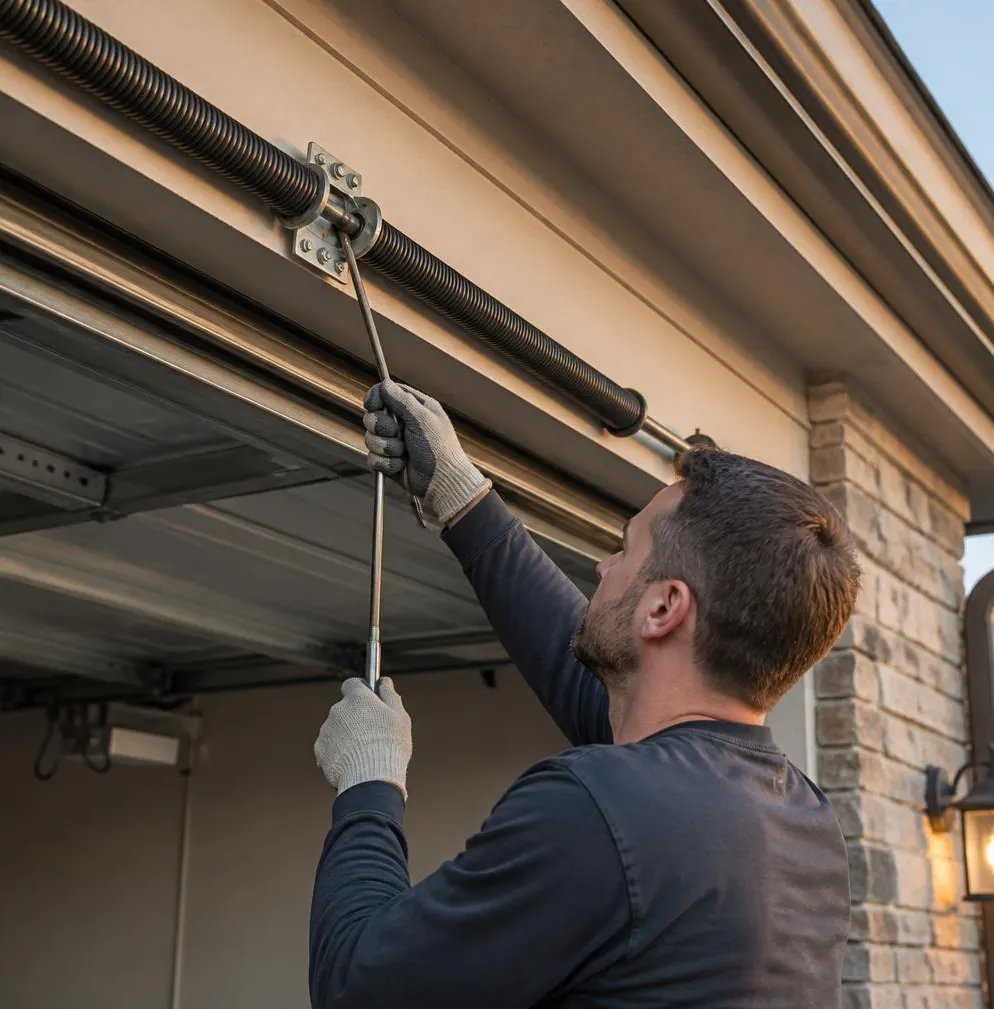
- Cables and springs: Look for fraying strands on the cables and rust or gaps in the spring coils. A spring that lets go during a storm leaves you with a door that won't open or close at the worst possible time.
- Panels: Any dent, crack, or warp is a structural weak point under wind load, not just cosmetic.
- Safety reversal: Test that the door reverses when it meets resistance — a basic safety check that's easy to skip but takes thirty seconds.
- Framing gaps: Check where the door meets the jamb for daylight or airflow, a sign wind-driven rain will find its way through.
Getting the Door Storm-Ready
A few upgrades make a real difference going into a wet, windy season:
- Reinforcement struts: Horizontal bracing kits add stiffness to wide or double doors, which are common on many South Bay homes and are more prone to flex under wind than single doors.
- Fresh weatherstripping: Replacing bottom and side seals before the rain starts is cheap insurance against water intrusion.
- Lubrication: Hinges, rollers, and tracks that have gone dry and dusty over summer need servicing so the door moves smoothly instead of binding.
- Battery backup opener: Storms and power outages tend to arrive together. A battery backup means you're not stuck choosing between a dead opener and manually wrestling a heavy door in the rain.
The real trade-off is reinforcement versus replacement. If the door is in decent shape structurally, a strut kit, new rollers, and fresh seals can buy several more good years. If the panels are already dented, the door is older wood construction, or it's been patched together from mismatched parts over time, reinforcing it is a temporary fix at best — a full replacement with a properly rated door is the more durable answer.
When to Call San Jose Door & Opener
If your inspection turns up frayed cables, a spring with visible rust or gaps, a panel that's dented or no longer sitting flush, or a door that won't track straight, that's not a wait-and-see situation heading into storm season. Our Garage Door Maintenance service covers the full tune-up — track alignment, lubrication, hardware checks — before the rain starts, and our Spring Replacement and Cable & Roller Repair work addresses the components most likely to fail under wind load. If your door is older or already showing structural wear, we'll walk you through reinforcement versus replacement honestly, based on what we actually find.
If you're in San Jose, Morgan Hill, Gilroy, Campbell, Los Gatos, Santa Clara, Milpitas, or Cupertino and haven't had your garage door looked at since last winter, now's the time. Call San Jose Door & Opener for a pre-storm inspection and get your door ready before the first real wind event of the season.